Understanding PCR vs. qPCR: Advantages of qPCR over traditional PCR
PCR vs qPCR
Quantitative polymerase chain reaction (qPCR) is a powerful molecular biology technique that has revolutionized the field of genomics. Compared with traditional PCR, qPCR has many advantages in sensitivity, accuracy, and speed, making it an important tool for various applications including gene expression analysis, pathogen detection, and genetic disease diagnosis.
PCR and qPCR both use the same basic principles of DNA amplification, but differ in methods and applications. Whereas traditional PCR simply amplifies DNA or RNA sequences, qPCR can quantitatively measure the amount of DNA or RNA present in a sample. qPCR does this by using a fluorescent dye that binds to the amplified DNA, allowing real-time monitoring of the amplification process.
qPCR
1. Sensitivity and Specificity
qPCR's advantage over traditional PCR is its superior sensitivity and specificity. qPCR can detect even small amounts of DNA or RNA in a sample, making it ideal for applications such as gene expression analysis, where even a slight change in gene expression can have a significant biological impact. In addition, qPCR can distinguish between specific target sequences and non-specific sequences, reducing the risk of false positive results.
2. Quantitative analysis
qPCR has the ability to perform quantitative analysis. Unlike traditional PCR, which only shows the presence or absence of a specific sequence, qPCR can accurately measure the amount of DNA or RNA present in a sample. This makes it possible to compare the expression of different genes or to quantify the amount of a particular pathogen in a sample.
3. Speed and efficiency
qPCR is also much faster and more efficient than traditional PCR. It eliminates the need for post-amplification analysis, reducing the time of analysis. In addition, qPCR can be multiplexed, allowing for the simultaneous detection of multiple target sequences in one reaction.
qPCR Application Areas
qPCR has made it an essential tool in many fields, including medical diagnostics, environmental monitoring, and food safety. For example, qPCR can be used to diagnose genetic diseases, detect pathogens in food and water samples, and monitor environmental contaminants.
In conclusion, qPCR has many advantages over traditional PCR in terms of sensitivity, specificity, speed, and efficiency. Its ability to perform quantitative analysis and detect small amounts of DNA or RNA makes it an indispensable tool in many fields. As the demand for accurate and reliable molecular biology techniques continues to grow, qPCR will undoubtedly continue to be an important tool in the scientific toolbox.
Anitoa-an innovative company for deep-farming fast, small-scale qPCR technology
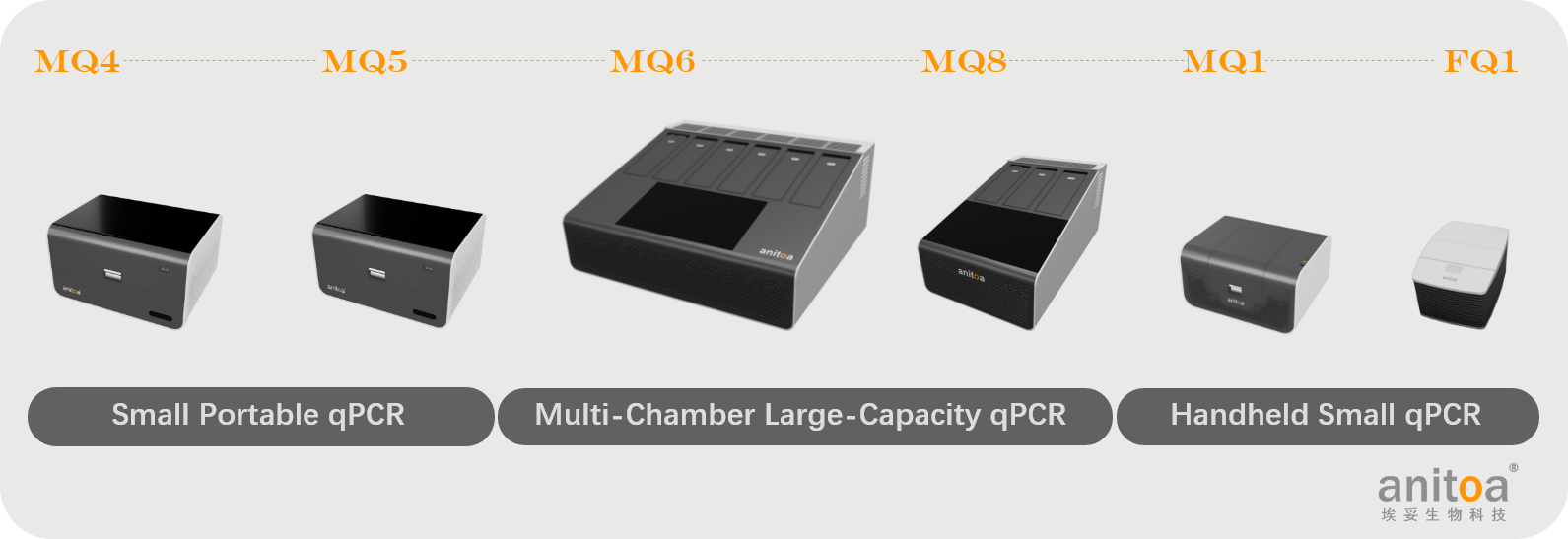
Anitoa is a professional research and development enterprise of molecular diagnostic qPCR instruments. It has independent intellectual property rights for core chip technology, optical technology, and patented technologies such as rapid heating, microfluidic control, and supporting reagents. The instruments developed by Anitoa are characterized as fast and simple, small instruments, and the expensive and complex large PCR instruments are being developed into truly portable POCT products. The "fully automatic portable qPCR instrument" and "fast qPCR instrument" being developed by Etuo Bio will be the most important products for molecular diagnosis to reach the grassroots level.